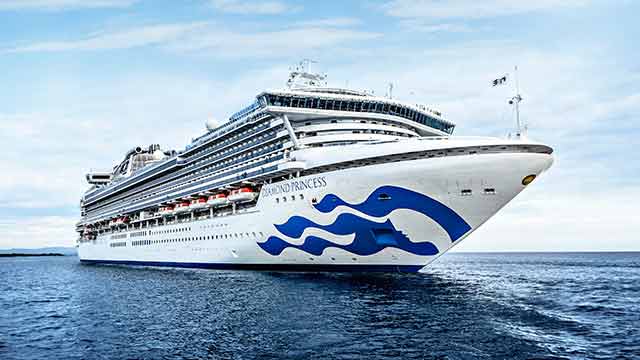












Vessel : Diamond Princess
Departure date : 09 Sep 2021
Depart: 05:00 PM
Welcome on Board to Diamond Priness in Yokohama, Tokyo.
Yokohama and Edo began life as sleepy fishing villages. That changed in the early 17th century after Tokugawa Ieyasu became Shogun. Edo became the center of political power in Japan, a position the city retained even after the restoration of Imperial rule in 1866.
Contemporary Tokyo may be the most astonishing city on earth. It's a paradoxical mix of ancient tradition and postmodern culture. The Ginza - an international shopping mecca - stands near the serene grounds of the Imperial Palace, and the hyper-speed of 21st century consumerism is mysteriously reconciled with the elegance and serenity of traditional culture. Tokyo provides the traveler with a dizzying experience.
With the Meiji Restoration of 1868, Edo was renamed Tokyo, the "Eastern Capital," to distinguish it from the old imperial capital at Kyoto, the "Western Capital."
Enjoy the facities on board.
Activities
Each day, a world of exciting activities awaits, from cooking demonstrations to dance classes, trivia contests and a range of enrichment programs, including our Encounters with Discovery at SEA™ speaker series from experts who offer insights into the places you’ll visit.
- Discovery at SEA™ Programs
- Festivals of the World
- Shops of Princess
- Art Gallery & Auctions
- Photo & Video Gallery
- Platinum Photography Studio
- Freshwater Pools & Hot Tubs
- Sports Court (basketball, volleyball, tennis)
- Princess Links (putting course)
Arrive : 07:00 AM
Depart: 05:00 PM
The capital of the Aomori Prefecture in northern Japan, Aomori derives much of its beauty from the apple orchards and cherry blossoms that encompass its landscape and the snow-covered Hakkoda Mountains that look on from a distance. Throughout its history, the city has been stricken with misfortune time and time again - in 1910, a fire destroyed Aomori, and during World War II, the city was left in ruins following an air raid - yet it always prevails.
Aomori is perhaps best known for its renowned Nebuta Festival, an elaborate yearly event in which participants illuminate giant paper representations of samurai warriors, animals, and popular cartoon characters while parading them through the streets.
Arrive : 09:00 AM
Depart: 06:00 PM
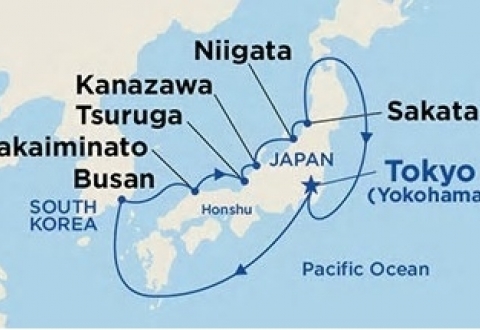
Traditionally famous for rice making and sake production, Niigata is the place for gourmet aficionados. It is also well known for the seafood caught from the Sea of Japan. With this variety of the commodity produced locally, Niigata developed from the wealth gained through shipping and trade by Kitamae-bune, which were cargo ships operated along the Sea of Japan between Hokkaido and Osaka from mid-18th century to the end of the 19th century.
To the south of Niigata is the Tsubame-Sanjo area famous today for metalworking. This derives from the production of Japanese nails used for Japanese traditional architecture. To discover Japanese craftsmanship, you will have the chance to visit the Suwada Open Factory. Also nearby is the religious center of Niigata in Yahiko. The Yahiko Shrine has gathered the devotion of the locals for more than a millennium.
Arrive : 09:00 AM
Depart: 06:00 PM
The serene calm of this largest city in the Wakasa region of Japan is one steeped in culture and poetic tales. The brilliant, wandering, Edo poet Matsua Basho was inspired to write a haiku about the glimmer of the moonlight over Tsuraga Bay, and the plethora of artisan crafts from lacquerware to washi (Japanese paper) keep the traditions of cultural beauty alive today. The area is home to one of the most picturesque pine groves in the country at Kehi-no-Matsubara, where white-sand beaches fringe the fragrant green boughs of the magnificent pines. The area of Mikata-goko is home to five sparkling, small lakes with colors ranging from turquoise blue to jade green, and the region is home to a number of important, brightly painted shrines. The Kehi-jingu Shrine was reared in 702 and a massive, vermillion, wooden torii gate was re-constructed in 1645. Museums abound, and the Fukui Prefectural Dinosaur Museum is popular with families wanting to explore the origins of the prehistoric world, while the moving Port of Humanity Museum honors the humanitarian work of Chiune Sugihara, credited with saving as many as 6,000 souls from the Nazis. Whether your interests lie in natural scenery, authentic experiences or historic sites, a day spent on these captivating shores will have you writing poetry of your own.
Arrive : 07:00 AM
Depart: 05:00 PM
Wedged between sea, sky and mountains, this small fishing port has been esteemed for centuries for its superb seafood. Here, the Sea of Japan yields up both crab and hon-maguro, the prized Bluefin tuna esteemed by gourmets around the world. Sakaiminato is also your gateway to a very ancient region of Honshu. West of the city lies Izumo-taisha, one of the oldest and holiest shrines in Shinto. This area is dotted with burial mounds from Japan's Bronze Age. The town of Matsue boasts the celebrated "Black Castle," a six-story, black-walled castle that home to a clan of the mighty Tokugawa dynasty that ruled Japan for over 250 years. And to the east rises the great snow-capped summit of Mt. Daisen, considered one of the four most scenic mountains in all Japan.
Also a common sight ashore are the Yokai - approximately 100 bronze statues of supernatural characters as imagined by famed manga comic author Shigeru Mizuki, who was born in Sakaiminato. The Yokai have become synonymous with the town and delight visitors at every turn.
Arrive : 07:00 AM
Depart: 04:00 PM
The second largest city in South Korea, Busan is your gateway to a fascinating land whose culture is a unique amalgam of old and new. Modern high-rise towers dwarf ancient Buddhist temples. The city's bustling business district offers a stark contrast to the serene grounds of Yongdusan Park. In short, Busan is a microcosm of South Korea, a nation whose startling economic success often obscures one of Asia's most sophisticated and venerable cultures.
Busan was the scene of bitter fighting during the Korean War. The United Nations Memorial Cemetery marks the final resting place for the troops from 16 nations who gave their lives during the conflict.
Arrive : 10:00 AM
Depart: 07:00 PM
From the 12th century to the Meiji Restoration of 1868, Kagoshima was the chief stronghold of the mighty Shimazu clan. The city lies at the top of the Satsuma Peninsula, a mountainous, geothermal wonderland of hot springs and geysers. The area is also rich in modern Japanese history: Saigo Takamori and the Satsuma samurai were leaders of the Meiji Restoration that toppled the shogun and restored the Emperor to power in 1868. In 1877, dissatisfied with the direction of the new government, Saigo led the Satsuma Rebellion, which ended in his death and the final defeat of the samurai.
The symbol of Kagoshima is Sakura Jima - the volcanic island that sits just offshore. The volcano has erupted over 30 times in recorded history.
Enjoy activities on board:
Activities
Each day, a world of exciting activities awaits, from cooking demonstrations to dance classes, trivia contests and a range of enrichment programs, including our Encounters with Discovery at SEA™ speaker series from experts who offer insights into the places you’ll visit.
- Discovery at SEA™ Programs
- Festivals of the World
- Shops of Princess
- Art Gallery & Auctions
- Photo & Video Gallery
- Platinum Photography Studio
- Freshwater Pools & Hot Tubs
- Sports Court (basketball, volleyball, tennis)
- Princess Links (putting course)
Arrive: 06:30 AM
Disembarking at Yokohama, Japan.
Yokohama and Edo began life as sleepy fishing villages. That changed in the early 17th century after Tokugawa Ieyasu became Shogun. Edo became the center of political power in Japan, a position the city retained even after the restoration of Imperial rule in 1866.
Contemporary Tokyo may be the most astonishing city on earth. It's a paradoxical mix of ancient tradition and postmodern culture. The Ginza - an international shopping mecca - stands near the serene grounds of the Imperial Palace, and the hyper-speed of 21st century consumerism is mysteriously reconciled with the elegance and serenity of traditional culture. Tokyo provides the traveler with a dizzying experience.
With the Meiji Restoration of 1868, Edo was renamed Tokyo, the "Eastern Capital," to distinguish it from the old imperial capital at Kyoto, the "Western Capital."
Diamond Princess is a treasure trove of exceptional delights waiting to be discovered. Dine on freshly prepared sashimi in Kai Sushi, watch street performers in the dazzling Atrium, or take in a lavish production show in our state-of-the-art theater. And for a unique treat visit the Izumi Japanese Bath, the largest of its kind at sea.
- Last Refurbished: February 2019
- Guest Capacity: 2,670 lower berths
- Number of Crew: 1,100
- Tonnage: 115,875